Saturday, 14 April 2012

Update - A post for Mummy.

It's been a while since I last blogged and in that time I have had various outings within the Fylde ringing and birding, most can be read about on my friend Seumus' blog "Fleetwood Birder", see link at side. I have however now left England for 8 months to work as Surveyor and Lead Bird ringer at Kvismaren Bird Observatory (until October) and later Lead bird ringer at Gedser Bird Obs in Denmark.

So I arrived in Sweden on the 12th April and already I'm getting stuck into the work! I am alone in the station at the moment but I have had a nice beginning to the season with a relaxed workload (for now) and lots of catching up with the birds and the neighbours.
At the moment the work is mainly surveys of the Wetland birds around the reserve and checking of the Starling boxes around the reserve. When other personell arrive however the workload multiplies many times over. A brief meeting with Bo (The Boss) revealed more about this years' surveys and I must say I am very excited to be involved in some hopefully ground breaking work.
For now though it's just a "I got here safely Mummy" and a few snaps from the first couple of days.
Nuthatch (Sitta europaea europaea) - Nest building outside the kitchen window.

Grass snake (Natrix natrix) mating, Female is the larger snake. 2 Males are squabbling to mate.

Monday, 27 February 2012

Twenty One

As the week draws to a close I reflect on what has been 'one to remember'. The title of this post refers to not only the amount of new birds caught this week but also a coming of age. My 21st Birthday was mid-week with a party at the weekend therefore reasonably little effort was put in to ringing.

Various outings with Heather and one with Ciaran yielded a mixed bag species wise.

1st - 8 Blue Tit
2nd - 3 Herring Gull
3rd - 2 Black-Headed Gull

The others made up of Great Tit, Dunnock, Coal Tit, Long-tailed Tit, Coot and a Mallard.


Another trip down to Fairhaven and a Norwegian Metal ringed Black-headed Gull was seen, along with the Norwegian colour ringed bird from earlier in the week.

A couple of Coot ringed outside the Fylde were seen this week too; all ringed at Southport by Kane.

A trip out with Seumus on Saturday Morning. A full report of proceedings can be found at http://www.fleetwoodbirder.blogspot.com/

A big thanks to Heather and Ciaran for making this weeks' ringing thoroughly enjoyable.

Thursday, 23 February 2012

Gulling around.

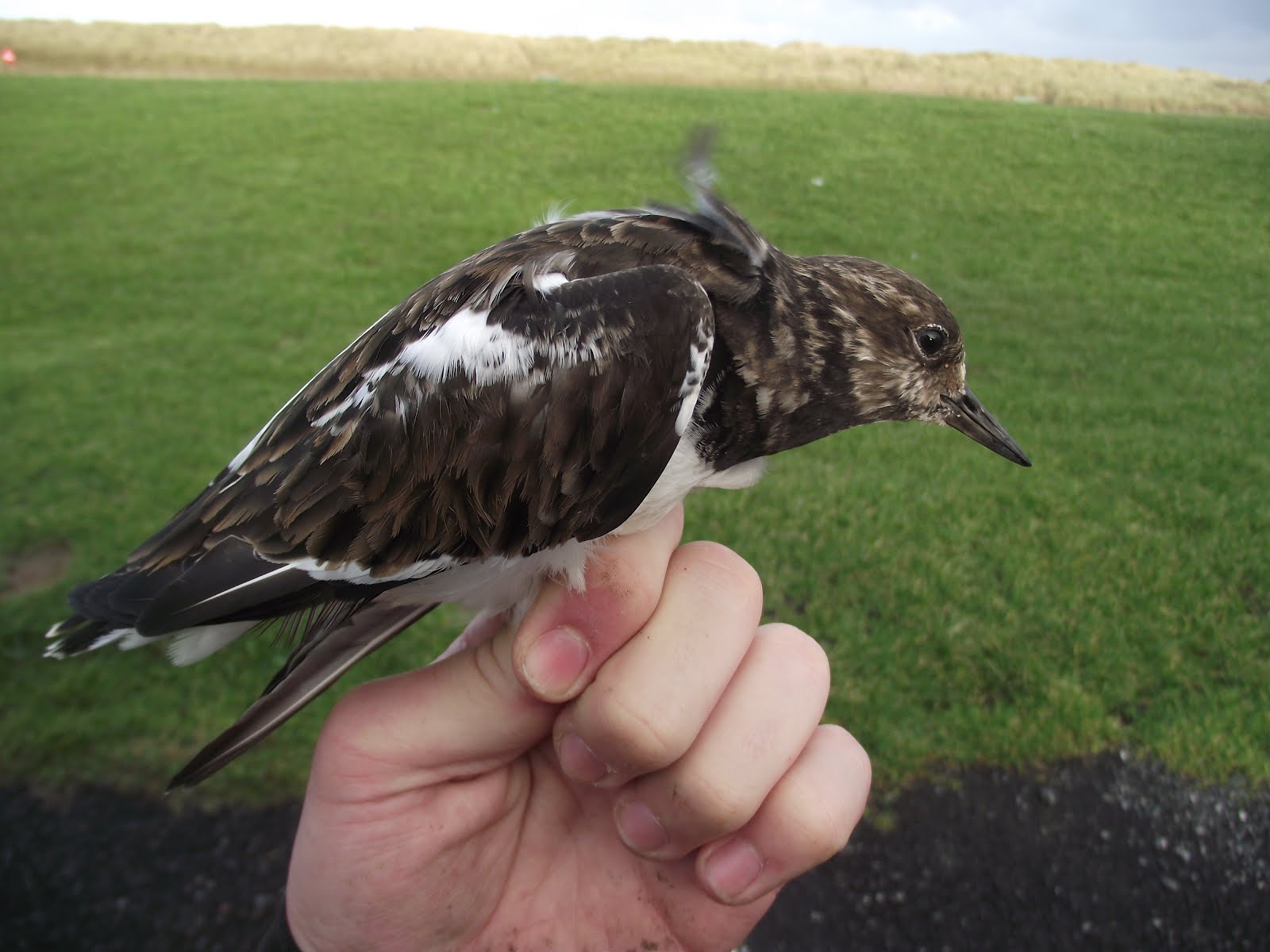
Earlier in the week I met up with several other members of Fylde Ringing Group in the hope of catching and ringing some Turnstone ahead of a Colour-marking project we hope to start soon. The birds were not playing ball at all. We failed to catch any.

Eager to ring a couple of birds, myself and Ian, spurred on by the recent C permit approvals made our way to a local park to try to grab a gull or two. We waited and watched a man mobbed by Herring Gulls whilst he fed them only to try ourselves and have all the birds disappear.

We ended the morning birdless.

In the Afternoon I again tried to catch birds, this time at my prime ringing spot, Stanley Park. Here the birds are fed by passers by and their children all day, everyday so the birds here are more used to scraps of bread!

With many birds showing interest in my offerings I decided I would pick a particular bird and catch it. Having so much choice doesn't happen often so you have to take your opportunities. The result; one very angry handful.


1st Winter Herring Gull

I also managed to catch 1 Black-headed Gull and 1 Coot before having to clean up and go to work.

Wednesday again a free hour around lunchtime I decided to try my luck at Fairhaven. Far too windy to catch birds by hand today as they were coming no way near close. Instead I had an audience, the audience included the birds below.


JON8 was first ringed in Oslo, April 2011

It has spent the winter 2011/12 around Fairhaven Lake 1078 Km away from it's original ringing site.


JHZ2

I am,as yet unsure of the origins of this bird (The same project maybe)

It just goes to show how much you can do in 1 hour and how valuable colour-ringing is to the re-sighting of ringed birds.

Sunday, 19 February 2012

This week.

This week has been much of the same, with trips to the park and in my urban garden I managed to catch only 21 new birds.

1 Black-Headed Gull
1 Coot
1 Robin
5 Blue Tit
8 Great Tit
4 Long-tailed Tit
1 Starling

A big thanks must go to "her indoors", Heather, who not only puts up with my work but often assists with the scribing and catching on various ventures.

Today was spent at the Northwest Ringers' Conference (Along with the other members of Fylde Ringing Group)where we heard fantastic talks from various people regarding ringing in the North West. It's fantastic to hear such talks and you always come away with more questions than you went with, also some new found enthusiasm. It was great to meet some new people and talk to some whom I've not seen for years.

Unfortunately I wasn't as lucky as fellow group members in the raffle, but there'll be a next time. Massive thanks to North Lancs Ringing group for hosting the day and for Seumus who drove.

Monday, 13 February 2012

Continued cold.

With the cold weather from last week looking like it would stay for a while there was continued effort to catch a few birds. This week, time was spent at Stanley Park and Fairhaven lake mainly with 35 new birds being captured either in traps or by hand.

11 Blue Tit
2 Great Tit
1 Long-tailed Tit
1 Robin
5 Starling
1 Mallard
6 Coot
8 Black-Headed Gull

In addition to the birds caught there was also a few noteworthy sightings, 4 Colour-ringed Coot at Fairhaven on the 9th all came from outside the Fylde but as yet we are yet to hear where they were originally ringed. Also 2 or 3 from Stanley park have been ringed elsewhere.

2 Black-headed Gull Darvics were read this week, one from Norway (Fairhaven Lake bird) and 1,White-VLJ from Denmark, returning for it's 5th Winter to Stanley park. It's always worth checking a roosting flock of gulls for darvics or metal rings as they are very often readable and there's many projects within Northern Europe where birds are being colour ringed, one within the North West of England has been started by Kane Brides.

Besides grabbing and trapping, this weekend I joined Seumus and set out to Rawcliffe Moss feeding station where we erected 2 nets. A nice morning was had with catch of 36 birds, 14 were recaptures but all of this data is worthwhile. 10 Yellowhammers were the undoubted highlight. For more see www.fleetwoodbirder.blogspot.com/

This year has got off to a flying start with over 450 birds already ringed, comparable with this time last year when only 290 new birds had been ringed. Our success this year is probably down to increased effort and better weather. Hopefully our luck continues...

Remember, please look out for birds with rings on when you are out and about as it really is useful to hear about any birds sighted. Any colour ringed Coot sighted can be sent to Kanebrides'@'gmail.com

Sunday, 5 February 2012

Back in action.

First of all a belated Happy new year to all, I really don't get much time to sit and blog so apologies for that.

After returning from Sweden it's been a bit of a wait to get going catching birds again. Trips to see people and lots of catching up was done so really ringing was put to the side.

In late december however a flurry of activity, I managed to catch a few half decent birds. Coot, 3 Herring Gull, 8 Black-Headed gull and some Mallard all added to the numbers and finally the Fylde ringing totals for 2011 stood at 4470 New birds. This is thanks to a big effort from the other guys.

Starting 2012 was a bit slow, a trip to Ireland put me out of action for some time and along with applying for jobs and catching up ringing was again put on the side. A lot of time and thought has been put into trying to catch Turnstone around the Fleetwood area and as of today 50 New birds have been ringed this winter; also a nice control of an Icelandic bird.


The group ended January on 317 new birds for the month and with Phil and myself our of action for a few weeks and the weather not really aiding netting this is a respectable number. Highlights of the month included a hand caught Tufted Duck at Stanley Park and a Collared dove which was tempted into the trap.


February saw an increased effort and a few Starlings, Herring Gulls, Black-Headed Gull, Coot, Turnstone and a new species for the ringing group - Pink-footed goose were caught at various locations.


There has been some debate about the origin of this Pink-foot after there being an injured individual there for some years, however this is not the same bird and having seen it fly in and out of the park on a number of occassions it provides a nice species "tick" for the group.

for the year total's so far see http://www.fleetwoodbirder.blogspot.com/

Thursday, 15 December 2011

Scandinavian scorcher

After a hectic rush of e-mails back in April I finally received confirmation that I was to be heading out to Sweden to work for 5 months; my role entitled Bird Surveyor/Head Bird Ringer. In all honesty I was a little pessimistic about this, maybe I was running before I could walk? However, 10 days after receiving confirmation I was on a flight and Stockholm bound.

It was the 18th of April when I departed the UK, seems a long while ago now after the rioting during the summer, the many deaths and huge headlines. It was however only 9 months ago. A train journey from Stockholm Airport led me towards my home for the next 5 months; Örebro. Here I was met by Magnus Persson, my partner in crime for the first 2 months of my stay. We made our way from there to Kvismaren Nature Reserve.

Magnus and me set about some of the survey work the morning after my arrival. Various surveys were to be done: Wetland bird surveys (WeBs), Farmland Bird Surveys, Breeding Bird Surveys (BBS), Sedge and Reed Warbler Surveys, Ortolan Bunting Studies, Starling surveys, Pied Flycatcher study, Black-headed gull surveys, Lapwing census, Marsh Harrier Nesting surveys and the primary task Hooded Crow Surveys. These surveys took up masses of our time, 14 hour days were not uncommon and many hours alone staring into hedges or reed beds became the norm! Much time in the field however produced many birds and this was especially a good time for me to catch up with some new species. Three-toed and Black Woodpeckers were amongst the nicest finds for me but also a feldegg – Yellow Wagtail was a nice result. Kvismaren Bird Observatory 137

                                                Kvismaren from Öby Kulle.

As the time rolled on into May the leaves on trees began to open and Kvismaren changed from a sleepy wintry scene to a blossoming haven for birds, migrants began to arrive and many birds were in good voice. I added Icterine, Marsh, Blyth’s Reed, Great Reed, River and Savi’s Warbler to my “life list” within 2 days of each other and from there the fun really began. I saw the rise and falls in the number of migrants and I came to appreciate bird migration on a whole new scale! We were joined by another member of staff or two whom focused primarily on the Great Reed Warblers that use Kvismaren as a breeding stronghold.

The Surveys dried up into mid June and it was time for Magnus to leave and me take charge of the place – by now the surveys were in their final stages and the writing up was well under way. My work load easing I had a little time to recoup myself in readiness for a long ringing season.


Kvismaren Bird Observatory 053             Above a picture of the elevator net erected at the southern tip of Ässön.

By June the 22nd I had cleared/re-built or created all of the net rides at 3 main sites (75 net rides).  I was joined by a couple of assistants at first, Zsombor Karolyi and Helena Hedkvist. These 2 helped immensely with the prep work and on June 23rd we began ringing. The Ringing season ran through from June 23rd to September 30th and we caught a little over 6000 New birds in this period; ringing was carried out during most days though some bad weather did hinder us in the mid/back end of September. I would like to thanks all those whom were involved throughout the season: Assistants - Zsombor Karolyi, Helena Hedkvist, Rebecca Knutsson, Jalle Hiltenen, August Thomasson, Philip Bertrand, Kristine Richardsson, Gittan Matsson, Heather McGinty, Magnus Friberg, Anders Petersson, Tage Ashing, Johannes and Monica Wearn, Deborah Arlt and Daniel Hedenbo. I would also like to thank Assisting ringers Peter Villanyi and Simon Valle who’s professional approaches and skills made it an utter pleasure to be out ringing. A special mention should go to a true friend and a massive help throughout his two visits to the station during the season Martin Carlsson – Martin came to me first in July with a vast knowledge of the birds and wildlife in Sweden however he had never seen many of the species we were set to catch. His enthusiasm to learn and better his knowledge was second to none and by his second visit Martin had gone from an inexperienced handler to an adequate ringer of birds, his transformation was truly amazing and I dare say we shared some amazing times together so Martin – Thanks very much for being my most dedicated assistant and great company throughout.


Kvismaren Bird Observatory 162                                            Martin Carlsson.

We broke many ringing total records due to our enthusiasm and I dare say that if the weather had been better we could have smashed a few more. Particularly special species for me to ring included Barred, Marsh, Icterine, Savi’s and Great Reed Warbler, Red-Breasted Flycatcher, Pygmy Owl and Goldeneye amongst others.

Pygmy owls 2                                              Pygmy Owls –Photo: Martin Carlsson.

September the 30th flew in and I said goodbye to Martin and Kvismaren and I had planned to be going home, however I decided whilst in Sweden I should visit the infamous Falsterbo and so a 2 week venture there ensued.

My first day at Falsterbo was unreal – I was greeted by a thick mist hanging low over the gold course and the car dodged birders on the way to ringing hut in half light. Song Thrushes and Robins ticked from every bush within the small garden and the staff were saying how today was the first “fall” of the Autumn. The first net-round came and we took 250 birds from the nets, mainly Robins and Song Thrushes but a scattering of Wrens, Goldcrests and Chafflings too. A smirking member of staff then appeared from the haze with one hand behind his back mumbling Pärluggla – I racked my brains and figured it out. TENGMALM’S OWL!!! This was a mega (lifer) for me and having been gutted about missing it in the north I was glad to finally catch up with one up close down here. As the morning rolled on more than 600 birds were caught and another lifer in the form of Serin appeared in a net. The 3rd and final lifer for this day was Short-Toed Eagle. After the Tengmalm’s appearing in the net during daylight in the garden we decided to try and catch owls at night! By the time we’d finished setting the nets I had another Tengmalm’s Owl in my hands. We caught around 10 (New) that night, truly unforgettable.

Falsterbo Bird Observatory 036

                                                Tengmalm’s Owls at Falsterbo

My 2 weeks wore on at Falsterbo and not only was I welcomed and Mentored by the amazing team here I also saw some mega migrations, caught some mega birds and met some amazing people. The Migrations here honestly have to be seen to be believed.

Again I planned on being home mid October as I’d now been away for 6 Months but instead I took a job as Ringer at Gedser Fuglestation in Southeast Denmark and here I again was welcomed by an amazing group of people and birds. Throughout the month long stay here I logged some nice birds and again gained some ringing “ticks”. Yellow-Browed Warbler and Great Grey Shrike had been bogey birds for me when it came to ringing and finally getting to grips with them was nice! Also Serin and Woodcock were nice in the hand and amazingly a Barnacle Goose I managed to catch by hand! A dozen Owls were caught during my time here split equally between Long-Eared Owls and Tengmalm’s and this was again a lovely opportunity to see such birds! The main highlight in Gedser for me was the Sparrowhawks and we caught over 60 in 1 Month!

Kvismaren Bird Observatory 224

                                   Juvenile female Sparrowhawk - Falsterbo

The 15th November flew round and it was time to head home – relaxed yet exhausted from a fascinating experience. I met many great people and shared many good times. The fond memories and great birds will never be forgotten and I truly wish to visit these places again! Thanks again to all whom I worked with during my time here and a special thanks to Bo Nielsen and Jan Sondell for employing me whilst at Kvismaren, Måns and Lennart Carlsson at Falsterbo and Rune Skjold Tjørnløv and Hans Lind at Gedser.